Ransom, Repeat, Expand: The Architecture of a $30 Billion Criminal Enterprise
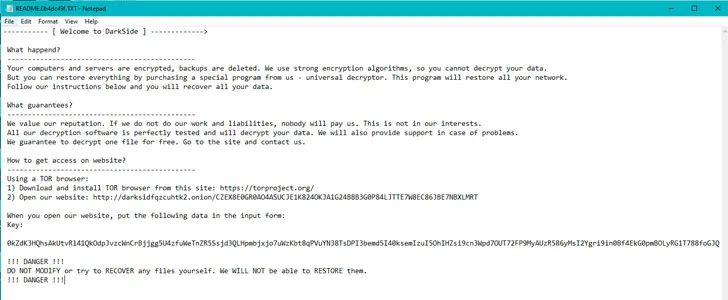
Photo: Unknown authorUnknown author, Public domain, via Wikimedia Commons
In the spring of 2021, operators of the DarkSide ransomware group brought the Colonial Pipeline — the artery supplying roughly 45 percent of the fuel consumed along the US East Coast — to a grinding halt. Gas stations in Georgia, the Carolinas, and Virginia ran dry. Panic buying ensued. The federal government declared a regional emergency. The attackers demanded, and largely received, a cryptocurrency ransom before partially restoring operations.
That single incident, more than almost any other, forced the American public to reckon with a question that cybersecurity professionals had been raising for years: how did ransomware — once the domain of clumsy, small-time fraudsters — become capable of disrupting critical national infrastructure?
The answer requires tracing a twenty-year evolution from bedroom coders to multinational criminal syndicates.
The Amateur Era: Locks Without Keys
The conceptual roots of ransomware stretch back to 1989, when biologist Joseph Popp distributed roughly 20,000 floppy disks at a World Health Organization AIDS conference. The disks contained a program that, after a set number of reboots, encrypted a victim's file directory and demanded payment by postal mail to a Panamanian post office box. It was crude, easily reversible, and largely ineffective — but the template had been established.
For the next fifteen years, ransomware remained a theoretical curiosity. The ecosystem needed two things it did not yet have: reliable encryption strong enough to be practically unbreakable, and an anonymous payment mechanism that would allow criminals to collect ransoms without exposing themselves to law enforcement.
By the mid-2000s, both ingredients were becoming available. Public-key cryptography had matured. And while Bitcoin would not arrive until 2009, early digital payment systems were beginning to hint at the infrastructure that would eventually underpin the ransomware economy.
The first wave of modern ransomware — exemplified by the Reveton "police ransomware" campaigns of 2012 and 2013 — was still relatively unsophisticated. Victims received a screen-locking message falsely claiming their computer had been flagged by the FBI for illegal activity and demanding a fine payable via prepaid debit card. The attacks were annoying and occasionally profitable, but they were the work of what the security community calls "script kiddies": individuals leveraging tools and techniques developed by others, without deep technical sophistication.
The Professionalization Inflection Point
Everything changed between 2013 and 2016. The arrival of CryptoLocker in late 2013 marked the beginning of the professional era. Its operators used military-grade RSA-2048 encryption, accepted Bitcoin exclusively, and operated a surprisingly functional customer support system to help victims who wanted to pay actually complete the transaction. When the US Department of Justice, working with international partners, dismantled the CryptoLocker infrastructure in 2014, investigators were struck not just by the technical sophistication but by the organizational discipline behind it.
CryptoLocker's successors — CryptoWall, Locky, Cerber — iterated rapidly. Each generation improved on the last in terms of encryption implementation, delivery mechanism, and payment infrastructure. By 2016, ransomware was generating an estimated $1 billion annually in the United States alone, according to FBI figures cited at the time.
Then came the development that transformed the threat landscape permanently: ransomware-as-a-service, or RaaS.
The Franchise Model: Ransomware-as-a-Service
RaaS represents the application of legitimate software-as-a-service business logic to organized crime. A core technical team — sometimes numbering only a dozen individuals — develops and maintains the ransomware platform, the command-and-control infrastructure, the victim-facing payment portal, and the decryption key management system. They then recruit "affiliates": third parties who license the platform, conduct their own intrusion campaigns, deploy the ransomware, and split the proceeds — typically 70 to 80 percent to the affiliate, 20 to 30 percent to the platform operators.
The implications are significant. Under this model, conducting a ransomware attack no longer requires deep technical expertise. Affiliates need only the ability to gain initial access to a target network — a skill that can be purchased separately on dark web forums from "initial access brokers" who specialize in compromising corporate environments and selling that access to the highest bidder.
Groups including REvil, Conti, LockBit, and BlackCat (ALPHV) operated under this franchise architecture. At its peak, the Conti group — believed to be based primarily in Russia — employed what amounted to a corporate organizational structure, with HR-style onboarding documentation, a help desk, and a management hierarchy revealed in a massive internal data leak in 2022.
American Hospitals and Municipalities: The Human Cost
The RaaS model enabled a dramatic expansion in the volume and diversity of targets. American hospitals have been among the most frequently struck. In 2020, a ransomware attack on Universal Health Services — one of the largest hospital chains in the country — forced staff across 400 facilities to revert to paper records, delaying care for critically ill patients for weeks. A study published in the journal JAMA Network Open found statistical evidence that ransomware attacks on hospitals correlate with increased in-hospital mortality rates for cardiac patients, as diverted ambulances and delayed diagnostics take their toll.
American municipalities have been equally exposed. Baltimore paid more than $18 million in recovery costs after refusing to meet a $76,000 ransom demand in 2019. Atlanta spent an estimated $17 million recovering from a SamSam ransomware attack in 2018. Small towns with limited IT budgets and aging infrastructure have proven particularly vulnerable — and particularly willing to pay, often through their cyber-insurance carriers, a dynamic that critics argue has fueled demand.
Cryptocurrency: The Payment Rail That Made It Possible
The ransomware economy is inseparable from cryptocurrency infrastructure. Bitcoin's pseudonymous transaction model — publicly recorded on the blockchain but not directly tied to real-world identities — provided the payment mechanism that earlier ransomware operators had lacked. More recently, privacy-focused coins such as Monero have become preferred by some operators precisely because they offer stronger transaction obfuscation.
However, the assumption that cryptocurrency payments are untraceable has proven increasingly incorrect. Blockchain analytics firms such as Chainalysis and Elliptic have developed sophisticated tools for clustering wallet addresses and tracing fund flows across exchanges. The Department of Justice's 2021 recovery of approximately $2.3 million of the Colonial Pipeline ransom — seized from a Bitcoin wallet after investigators obtained the private key — demonstrated that cryptocurrency forensics had reached a level of maturity capable of producing tangible law enforcement outcomes.
Disruption Efforts and Their Limits
Federal agencies, led by the FBI's Cyber Division and the Cybersecurity and Infrastructure Security Agency (CISA), have significantly intensified their response to ransomware over the past four years. Operation Cronos, a coordinated international effort in early 2024, seized LockBit's infrastructure, arrested two affiliates, and published decryption keys for victims. The Hive ransomware group's infrastructure was infiltrated by the FBI in 2022 and 2023, with agents covertly obtaining decryption keys and distributing them to victims — preventing an estimated $130 million in ransom payments.
These are meaningful victories. They are not, however, permanent defeats. The criminal organizations behind ransomware have demonstrated a persistent capacity to reconstitute after law enforcement actions, rebranding under new names and recruiting new affiliates. LockBit's operators publicly claimed to be resuming operations within days of the Cronos seizure.
The structural challenge is jurisdictional. The most sophisticated ransomware operations are headquartered in countries — principally Russia, but also North Korea and Iran — that do not extradite their nationals to face US criminal charges, and that at times appear to tolerate or even quietly encourage ransomware activity directed at Western targets.
For American organizations, the practical upshot is that ransomware must be treated as a persistent, structural risk rather than an episodic threat. Offline backups, network segmentation, multifactor authentication, and regular incident response exercises are not optional hygiene measures — they are the minimum viable defense against an adversary that has, by any reasonable measure, achieved the scale and sophistication of a mature industry.