The Sting in the Shadows: Anatomy of a Federal Takedown of a Dark Web Drug Marketplace
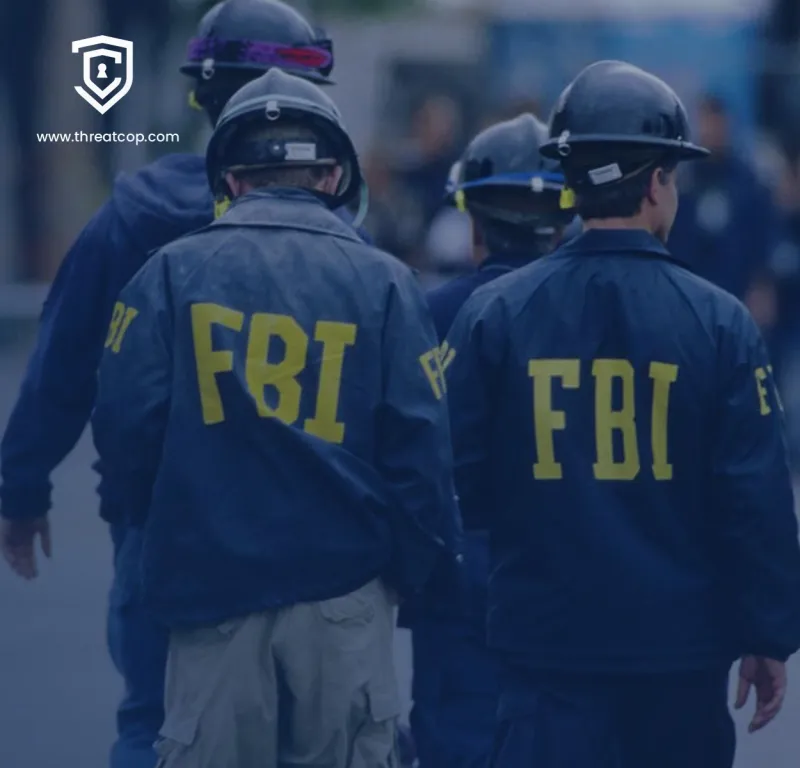
Photo: FBI cybercrime investigation dark web server room law enforcement digital, via threatcop.com
The dark web's promise to its users has always rested on a seductive premise: that the layers of encryption and anonymization technology shielding its marketplaces are impenetrable, that the distance between a pseudonymous vendor and a federal indictment is effectively infinite. Law enforcement agencies have spent the better part of a decade methodically dismantling that premise—one takedown at a time.
The operational playbook that brought down major dark web marketplaces including Silk Road, AlphaBay, Hansa Market, and, more recently, Monopoly Market and Genesis Market is neither magic nor luck. It is the product of sustained investment in digital forensics capabilities, strategic patience, international legal cooperation, and—critically—the exploitation of human error at every layer of the criminal stack. Understanding how these operations unfold is essential context for anyone seeking to comprehend the real-world mechanics of cybercrime enforcement.
What a Dark Web Marketplace Actually Is
Before examining how these platforms fall, it is worth establishing what they are. Dark web marketplaces are e-commerce platforms accessible only through anonymizing software—most commonly the Tor network, which routes internet traffic through a series of encrypted relays to obscure the originating IP address. These platforms typically facilitate the sale of illegal narcotics, stolen financial credentials, counterfeit documents, and other contraband, with transactions conducted in cryptocurrency to further complicate the financial trail.
The operators of these platforms function as administrators of a criminal enterprise, collecting commission fees on every transaction. Vendors maintain reputation scores and customer reviews in a structure that deliberately mirrors legitimate e-commerce platforms. The ecosystem, at its peak, involved tens of thousands of active listings and hundreds of millions of dollars in annual transaction volume.
From the outside, the architecture appears formidable. From the inside—as federal investigators have repeatedly demonstrated—it is riddled with exploitable weaknesses.
The Opening Move: Signals Intelligence and Blockchain Tracing
Most major dark web investigations do not begin with a dramatic tip or a lucky break. They begin with data. Federal agencies, particularly the FBI, the Drug Enforcement Administration, and Homeland Security Investigations, have developed sophisticated capabilities for monitoring cryptocurrency blockchains—the public, immutable ledgers that record every transaction conducted in Bitcoin, Monero, and other digital currencies.
While cryptocurrency transactions do not inherently reveal the identities of the parties involved, the blockchain itself is permanently and publicly visible. Specialized blockchain analytics firms—Chainalysis and Elliptic are among the most prominent—have developed tools that cluster wallet addresses, trace fund flows across exchanges, and flag transactions associated with known illicit platforms. When a marketplace operator eventually moves funds to a regulated cryptocurrency exchange that requires identity verification, that single action can unravel months or years of careful anonymization.
In the AlphaBay investigation, which culminated in a 2017 takedown coordinated between the FBI, Europol, and Thai law enforcement, investigators traced cryptocurrency flows from the marketplace to accounts that could be linked to the platform's administrator, Alexandre Cazes, a Canadian national living in Thailand. Cazes was arrested at his home in Bangkok; he died by suicide in custody days later. The operation demonstrated that even technically sophisticated operators leave financial fingerprints.
The Human Element: Operational Security Failures
If blockchain tracing represents the technical spine of dark web investigations, human error provides the connective tissue. The operational security failures documented in federal indictments are, in retrospect, striking in their mundanity.
In the Silk Road case—the foundational dark web prosecution—Ross Ulbricht, the platform's operator, had posted questions about Tor hidden services on a public programming forum using an email address that contained his real name. That early digital breadcrumb, surfaced years later by investigators, contributed to building the case that ultimately connected the pseudonymous "Dread Pirate Roberts" to a specific individual in San Francisco.
Vendors on these platforms have been identified through even more prosaic mistakes: shipping packages from post offices near their home addresses, using the same usernames across dark web forums and clearnet platforms, including traceable metadata in photographs of their product listings, and communicating with buyers in ways that inadvertently revealed geographic information.
"The technology is not what catches most of these people," a former federal cybercrime prosecutor observed in a published interview following the Genesis Market takedown in 2023. "The technology is what gives us the framework. What catches them is the gap between the persona they project online and the human being who has to go to the grocery store, pay rent, and make mistakes."
Infiltration: The Undercover Dimension
Perhaps the most operationally sensitive aspect of dark web investigations is the use of undercover agents and confidential informants. Federal agencies routinely embed investigators within marketplace communities, building vendor reputations over extended periods to gather intelligence on supply chains, identify key participants, and establish the evidentiary foundation for prosecutions.
The Hansa Market operation, coordinated by Dutch law enforcement in collaboration with the FBI and Europol, represents one of the most sophisticated examples of this approach. After seizing control of the AlphaBay marketplace in July 2017, authorities deliberately delayed its public shutdown to redirect the resulting user migration toward Hansa—which Dutch police had secretly taken over a month earlier. For approximately four weeks, investigators operated Hansa while covertly harvesting user data, including shipping addresses submitted by buyers and login credentials for thousands of accounts. The operation netted intelligence on vendors and buyers across multiple countries before the platform was publicly shut down.
The legal and ethical frameworks governing undercover digital operations are complex, and they vary significantly across jurisdictions—a complexity that itself shapes how international investigations are structured and prosecuted.
Technical Exploitation: Finding the Server
For all the emphasis on human error, technical vulnerabilities have also played a decisive role in several major takedowns. The fundamental challenge for dark web marketplace operators is that their platform must be hosted on physical infrastructure somewhere in the world. Tor's hidden service protocol is designed to conceal that infrastructure, but the protocol's protections are not absolute.
Investigators have successfully identified the real IP addresses of dark web servers through several documented methods: misconfigured server software that leaked identifying information in HTTP headers, vulnerabilities in the Tor implementation itself, and—in some cases—legal process served to hosting providers in jurisdictions with cooperative law enforcement relationships.
Once a server's physical location is identified, authorities can work with local law enforcement to seize the hardware, preserve forensic images of the data stored on it, and extract information that may identify operators, vendors, and—in some cases—buyers.
The Legal Aftermath and Deterrence Question
The sentences handed down in major dark web prosecutions have been severe. Ulbricht received two life sentences without the possibility of parole. Other marketplace operators and significant vendors have received sentences measured in decades. Federal prosecutors have consistently pursued asset forfeiture alongside criminal penalties, seizing cryptocurrency holdings that in some cases represent tens or hundreds of millions of dollars.
Whether these outcomes meaningfully deter the broader ecosystem remains a subject of debate among criminologists and policy researchers. New marketplaces emerge to replace those that are shut down, and the overall volume of dark web commerce has not shown sustained decline in response to enforcement actions. What has changed is the risk calculus for operators and vendors, who now operate with the demonstrated knowledge that law enforcement agencies have the tools, the patience, and the international partnerships to pursue them effectively.
What This Means for Understanding Online Crime
For readers seeking to understand the dark web not as a participant but as an informed observer, the pattern of these investigations carries several important lessons. Anonymization technology, however sophisticated, does not confer immunity from investigation. Cryptocurrency, however decentralized, leaves traces. And the operational security required to sustain a criminal enterprise online over an extended period demands a consistency of discipline that human beings reliably fail to maintain.
The agencies pursuing these cases have invested heavily in the technical and legal infrastructure required to operate in this environment, and the results—measured in indictments, convictions, and seized assets—reflect that investment. The shadows of the dark web, it turns out, are not as deep as its operators once believed.