Every Breath You Take: How Your Smart Home Is Quietly Building a Dossier on You
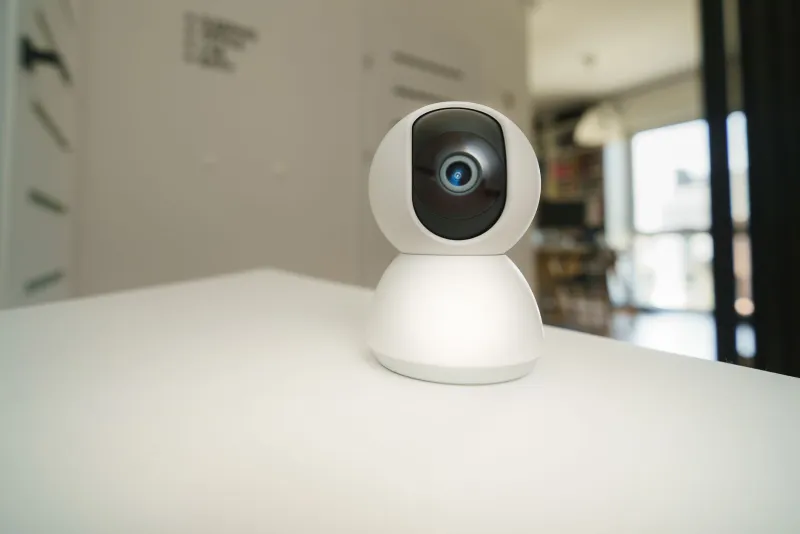
There is a particular irony in the modern American home. A space historically considered a sanctuary from outside scrutiny has, over the past decade, been voluntarily populated with devices that observe, record, and transmit the most granular details of daily life. The smart speaker on the kitchen counter, the fitness tracker on the wrist, the doorbell camera facing the street, the thermostat that learns sleeping patterns—each one is a data collection endpoint, and together they compose a behavioral profile of remarkable depth.
What makes this surveillance economy distinct from its government counterpart is not its sophistication. In several respects, the commercial version is more comprehensive. It is also largely invisible to the people it monitors.
The Architecture of Ambient Data Collection
To understand the scope of what connected devices capture, it helps to consider not just what they are marketed to do, but what they are technically capable of doing—and what their terms of service actually permit.
A smart speaker, for instance, is designed to respond to a wake word. But research by security academics at Northeastern University and Imperial College London has demonstrated that such devices activate unintentionally dozens of times per day, recording ambient audio in the process. That audio travels to manufacturer servers, where it may be reviewed by human contractors, analyzed by machine-learning systems, or retained indefinitely depending on the company's data-retention policies.
Smart televisions log viewing habits with a technology called Automatic Content Recognition, or ACR, which identifies what is on screen at intervals of seconds and transmits that data back to manufacturers and advertising partners. Fitness trackers record heart rate variability, sleep cycles, menstrual cycles, and GPS location continuously. Smart thermostats infer occupancy patterns with enough precision to determine when a household wakes, leaves, returns, and retires.
Individually, each data stream may seem benign. Aggregated, they constitute something that no physician, therapist, or government agency possesses: a continuous, multimodal record of a person's physical behavior inside their own home.
From Manufacturer to Broker: The Data Supply Chain
The destination of this data is rarely a single corporate server. The commercial ecosystem through which connected-device data flows involves manufacturers, cloud infrastructure providers, analytics platforms, and data brokers—entities that purchase, repackage, and resell consumer information to advertisers, insurers, employers, and researchers.
A 2023 investigation by the nonprofit Mozilla Foundation found that the majority of popular connected-car platforms—a category increasingly integrated with smart-home ecosystems—shared or sold user data to third parties, with some explicitly noting in their privacy policies that data could be used by insurance companies. The implications for health and fitness data, which carries even greater intimacy, are proportionally more serious.
Data brokers occupy a particularly opaque position in this supply chain. Under current federal law, there is no comprehensive statute governing what brokers may collect, retain, or sell, nor is there a universal right for Americans to access or delete the profiles these companies maintain. California's Consumer Privacy Act and a small number of state-level equivalents have introduced limited protections, but enforcement is inconsistent and the burden of action falls on the consumer.
When the Data Leaves the Building
Two scenarios transform ambient data collection from a privacy concern into an active threat: breaches and legal process.
Connected-device manufacturers have demonstrated a mixed record on security. In 2021, a vulnerability in Verkada's enterprise camera platform exposed live feeds from more than 150,000 cameras installed in hospitals, schools, and private residences. In 2022, a breach affecting the home-security company SimpliSafe raised questions about the exposure of customer monitoring schedules. The attack surface presented by smart-home ecosystems is substantial: each device represents a potential entry point, and the networks connecting them are often inadequately segmented from devices containing sensitive personal or financial data.
The legal dimension is equally consequential. Law enforcement agencies at the federal and state levels have issued subpoenas and search warrants for data held by smart-device manufacturers, and courts have generally compelled disclosure. Amazon has acknowledged receiving and complying with law-enforcement requests for Alexa voice recordings. Ring, Amazon's doorbell-camera subsidiary, drew significant public scrutiny after it emerged that the company had established data-sharing partnerships with hundreds of police departments, allowing officers to request footage directly—initially without requiring a warrant in all jurisdictions.
In criminal proceedings, smart-home data has been admitted as evidence in homicide cases, domestic-violence prosecutions, and arson investigations. The same data trail that makes a device convenient makes it a comprehensive witness.
Auditing Your Exposure
Mitigating the risks associated with smart-home devices does not require returning to an analog household. It does require deliberate configuration choices that most manufacturers do not make easy.
Review and revoke data-sharing permissions. Most connected-device apps provide settings menus that disclose what data is collected and with whom it is shared. Advertising and analytics permissions are frequently enabled by default and can often be disabled without affecting core functionality. Spending fifteen minutes in each app's privacy settings is a low-effort intervention with meaningful impact.
Disable features that generate the most sensitive data streams. Voice-history storage on smart speakers can typically be turned off, and wake-word sensitivity can be reduced. ACR on smart televisions can usually be disabled in the initial setup menu or in the privacy section of system settings—a step that Samsung, LG, and Vizio all technically permit but do not prominently advertise.
Segment your network. Placing smart-home devices on a dedicated guest network, separate from computers and phones that handle financial or medical data, limits the lateral movement available to any attacker who compromises a device. Most modern home routers support this configuration.
Evaluate before you purchase. The Mozilla Foundation's Privacy Not Included project rates connected devices on their data practices before consumers buy them. Choosing manufacturers with stronger privacy commitments—or simpler, less connected alternatives—reduces exposure at the source.
Understand your state-level rights. Residents of California, Colorado, Virginia, Connecticut, and several other states have statutory rights to request copies of the data companies hold about them and to demand deletion. Exercising these rights requires submitting formal requests to individual companies, but the process is well-documented and legally enforceable.
The Regulatory Gap
The fundamental problem is structural. American consumer-privacy law has not kept pace with the proliferation of connected devices. The Federal Trade Commission possesses authority to pursue deceptive data practices, but it lacks the resources and statutory mandate to comprehensively regulate an industry that now encompasses billions of devices.
Legislative proposals for a federal privacy standard have stalled repeatedly in Congress, leaving a patchwork of state laws that protect some Americans more than others. Until that gap closes, the responsibility for managing smart-home data exposure falls almost entirely on individual consumers—most of whom were never informed of the scope of what they consented to when they first plugged in a device and accepted a terms-of-service agreement they did not read.
The home has always been the place Americans feel most secure. The connected home, as currently constituted, may be the place they are most closely watched.